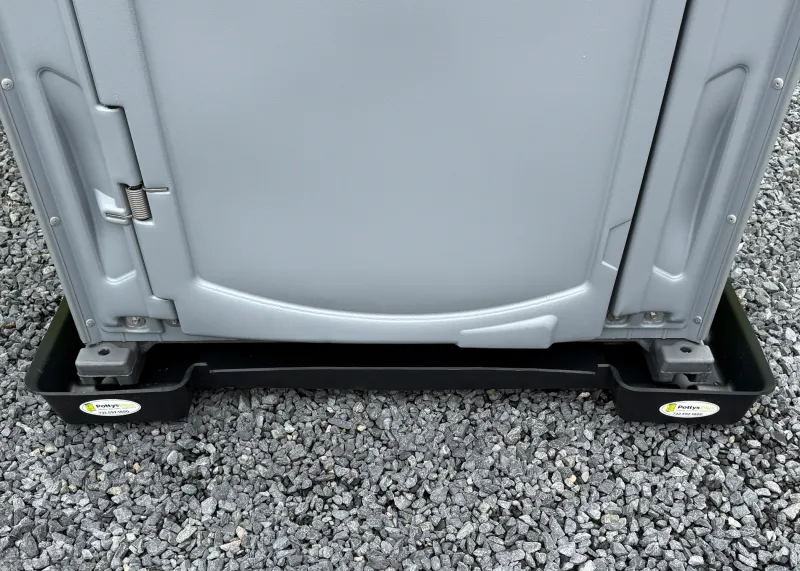
About the Containment Tray
Portable toilet containment trays are more than an optional accessory — they are a legal compliance requirement in many municipalities across New Jersey, New York, and Pennsylvania. Placed beneath portable restrooms, they create a sealed secondary containment area that captures any spills, leaks, or overflow from the unit before it can reach the ground and enter stormwater drainage systems.
Without containment trays, construction sites and events near storm drains, waterways, or environmentally sensitive areas risk fines, stop-work orders, and environmental violations. The New Jersey Department of Environmental Protection (NJDEP) and many local municipalities explicitly require containment for portable toilets at certain site types — particularly near any stormwater infrastructure.
What Containment Trays Prevent
- Stormwater contamination from portable restroom runoff
- Soil contamination at long-term construction sites
- OSHA violations related to sanitation spill management
- EPA environmental violations near waterways or storm drains
- Local municipal fines for non-compliant portable restroom placement
- Stop-work orders from municipal inspectors
When Are Containment Trays Required?
Containment trays are typically required when portable toilets are placed near storm drains, on or near impervious surfaces, within certain distances of waterways, wetlands, or environmentally sensitive areas, or at sites operating under a NJPDES (NJ Pollutant Discharge Elimination System) permit. If you're unsure whether your site requires them, contact us and we'll help you assess.
Even when not explicitly required, containment trays are best practice — they protect your site from liability and make cleanup significantly easier during pump and service visits.
Delivery & Service Across New Jersey
Add containment trays to any porta potty order at checkout. We deliver and install trays alongside the units at no extra delivery charge. Call (732) 592-1800 or book online to include trays with your order.